


You probably drive the same highways every week without giving them much thought. You merge onto the Turnpike, settle into traffic, and hope everyone around you is paying attention. A new study from Camili & Capo, PA suggests that some of the most dangerous highways in New Jersey deserve a closer look, and the reasons behind the numbers may change how you think about your daily commute.
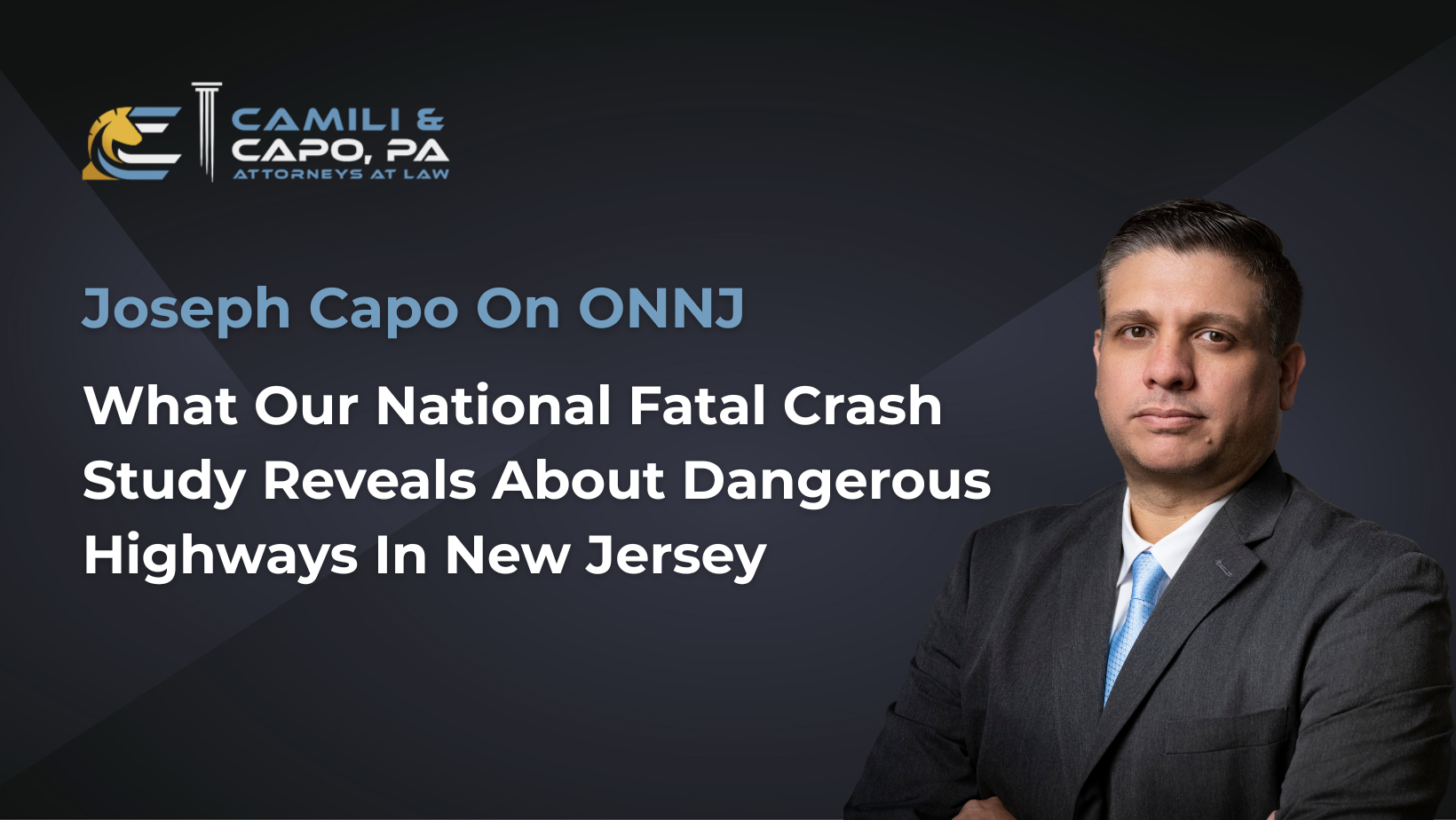
On October 19, 2026, Joseph Capo, partner and co-owner of our firm, joined ONNJ (On New Jersey) to walk viewers through our National Fatal Crash Study. The conversation covered where fatal crashes happen most often and why New Jersey drivers face unique risks.
If you or someone you love has been hurt in a highway crash, you don't have to sort through the aftermath alone. Call Camili & Capo, PA at (973) 834-8457 or fill out our online contact form to schedule a free, no-obligation consultation. Our team is available 24/7.
Fatal Crash Study Findings: Which Interstates Ranked As The Deadliest In America?
Our research team examined fatal crashes on major interstate highways across the United States from 2019 through 2023. Rather than simply counting crashes, the study measured fatal crashes per mile of roadway. That approach gives a fairer comparison between a short, crowded highway segment and a long stretch that runs through open country.
During the ONNJ interview, Joe highlighted several findings that stood out:
- Interstate 4 in Florida: Ranked as the most dangerous stretch in the country with 203 fatal crashes
- I-4 crash rate: Roughly 1.54 fatal crashes for every mile of roadway during the study period
- I-95 nationwide: Ranked fourth in the country when the entire East Coast corridor is measured
- I-95 in New Jersey: Ranked 14th nationally, with about 1.28 fatal crashes per mile
For New Jersey residents, that last figure hits close to home. The Garden State segment of I-95 carries heavy commuter, delivery, and travel traffic every day, and the data shows those trips carry real risk.
Dangerous Highways In New Jersey: Why Does I-95 Rank So High On The List?
When the host said he expected I-95 to rank even higher than 14th, Joe pointed out that the full length of I-95 ranks fourth in the country. Earlier in the interview, he linked New Jersey’s numbers to population density and failing infrastructure, two pressures that leave drivers with little room for error.
Truck traffic adds another layer. Joe explained that the Garden State Parkway doesn’t allow big tractor-trailers, so many of those trucks end up on the New Jersey Turnpike. When passenger cars share busy lanes with large commercial trucks, a small mistake can have serious consequences.
Joe also noted that I-95 is an interstate and a through highway, so it carries many out-of-town travelers who don’t know the roads. If you grew up here, you know which Turnpike exit gets you home. Visitors don’t, and many are checking a GPS while trying to make sense of confusing exits. As Joe put it, that combination creates a very deadly recipe on New Jersey highways.
Distracted Driving On New Jersey Highways: How Much Does One Glance At A Phone Matter?
Joe called distracted driving the “big kicker” behind the numbers. He pointed to drivers on their cell phones, drivers who are intoxicated or impaired, and drivers who are simply not paying attention. As he explained, it only takes a split second of looking down for another car to change lanes or merge, and a crash can happen that quickly.
The host shared his own observations, including drivers he sees in New Jersey and Fort Lauderdale weaving across lanes at high speeds since the pandemic. Joe agreed that many people now seem rushed and more careless on the road. He pointed to merging without turn signals, phone use behind the wheel, and not watching where they’re going as things drivers see every day.
Joe also made a point that’s easy to forget when you look at statistics. Behind every one of these crashes, there is a family that has lost someone dear to them. As the host said at the end of the segment, the hope is that people learn from these findings.
Highway Crashes In South Jersey: Are Rural And Suburban Roads Any Safer?
Many people assume the most dangerous highways in New Jersey sit near Newark, Jersey City, or the George Washington Bridge approach. Joe explained that the danger extends well beyond North Jersey. He referenced a Philadelphia Inquirer analysis, published in September 2026, that reviewed crash data from 2019 through July 2026. That analysis found that the interchange where I-76, Route 42, and I-295 meet in Camden County has recorded some of the highest fatal crash rates in the region. According to the Inquirer, a 1.3-mile stretch of I-76 had 10 fatal crashes.
The Florida findings tell a similar story. I-4 runs through long, open sections between Tampa and Daytona where drivers may speed and emergency help can take longer to arrive. As Joe noted, some of the deadliest crashes happen in less crowded areas where drivers let their guard down.
Staying Safer On The Turnpike And Parkway: What Practical Steps Can You Take Today?
You can't control other drivers, but you can lower your own risk. Small habits make a meaningful difference on busy roads like the Turnpike, the Parkway, and I-80 through Passaic and Bergen counties.
- Put your phone away: Set it to driving mode or place it out of reach before you start the car
- Plan your route: Review your exits ahead of time so you aren't scrambling at the last second
- Give trucks space: Stay out of blind spots and allow extra room when a tractor-trailer merges
- Resist the urge to speed: Keep a steady pace when traffic opens up after a slowdown
- Signal every move: Use your turn signal for every lane change, even in light traffic
These steps can't guarantee your safety, but they give you more time to react when someone else makes a mistake.
Highway Accident Claims In New Jersey: What Should You Do After A Serious Crash?
If you've been hurt in a crash on a busy New Jersey highway, the moments and days afterward can feel overwhelming. Taking a few key steps can protect both your health and your ability to pursue a claim.
- Call 911: Request police and medical help, and make sure a crash report is created
- Get medical care: See a doctor promptly, even if your injuries seem minor at first
- Document the scene: Take photos of vehicles, road conditions, signs, and visible injuries if you safely can
- Collect information: Get names, contact details, and insurance information from drivers and witnesses
- Limit insurer conversations: Avoid giving recorded statements before you speak with a lawyer
Evidence on a busy highway can disappear quickly. Vehicles are towed, debris is cleared, and traffic camera footage may be overwritten. Contacting a New Jersey car accident lawyer early gives our team the best chance to preserve what matters.
New Jersey Car Accident Law: How Do Fault And Insurance Rules Affect Your Claim?
New Jersey has its own set of auto insurance and injury rules, and they can shape what compensation is available to you. Understanding the basics helps you make informed decisions after a crash.
New Jersey is a no-fault state. Your own Personal Injury Protection (PIP) coverage generally pays your medical bills after a crash, regardless of who caused it. Your right to sue the at-fault driver for pain and suffering may depend on the lawsuit option you selected on your auto policy. Many drivers carry the limitation on lawsuit option, which generally requires a permanent injury or other serious injury before you can recover non-economic damages.
New Jersey also follows a modified comparative negligence rule. If you share some of the blame for a crash, your compensation may be reduced by your percentage of fault. If you are found more than 50 percent at fault, you cannot recover damages from the other driver.
Timing matters as well. In most New Jersey car accident cases, you generally have two years from the date of the crash to file a lawsuit. Certain claims, such as those involving a government entity, have much shorter notice deadlines. State law also bans the use of handheld phones while driving, and evidence that the other driver was texting or talking on a phone can support your claim.
Crashes involving commercial vehicles and trucks often bring additional rules into play. Federal safety regulations govern driver hours, vehicle maintenance, and cargo loading. A trucking company, a maintenance contractor, or a cargo loader may share responsibility along with the driver.
Injured On I-95 Or Another New Jersey Highway: Where Can You Get Local Legal Help?
Our firm represents injured people throughout New Jersey. Our offices are located in Totowa, Newark, Hackensack, and New Brunswick, with a Tuckerton office available by appointment. Whether your crash happened on the Turnpike near Newark Liberty International Airport, on the Parkway through Bergen County, or at the I-76 and Route 42 interchange in Camden County, our team can help you understand your options.
Joseph Capo brings extensive civil litigation and trial experience to every case. Our attorneys investigate the facts, work with accident reconstruction professionals when needed, deal directly with insurance companies, and prepare each case as if it may go to trial. When necessary, we are willing to take a case to court to protect your interests.
For eligible personal injury matters, you pay no attorney fees unless we recover compensation for you. Home and hospital visits may also be available if your injuries make it hard to come to us.
Frequently Asked Questions About Dangerous Highways In New Jersey
What did our fatal crash study measure?
The study reviewed fatal crashes on major U.S. interstates from 2019 through 2023 and ranked highways by fatal crashes per mile. This method allows a fair comparison between highways of different lengths.
Which of the dangerous highways in New Jersey ranked highest in the study?
The New Jersey segment of I-95 ranked 14th nationally, with roughly 1.28 fatal crashes per mile. The full length of I-95 ranked fourth in the country.
Why are New Jersey Turnpike accidents so common?
Heavy truck traffic, dense population, aging infrastructure, confusing exits, and out-of-state drivers all play a role. Distracted and impaired driving make these risks even worse.
Do I need a New Jersey car accident lawyer after a highway crash?
You are not required to hire one, but highway crashes often involve serious injuries and multiple insurers. An experienced personal injury lawyer can preserve evidence and explain how New Jersey's insurance rules apply to you.
How long do I have to file a highway accident claim in New Jersey?
Most car accident lawsuits in New Jersey must be filed within two years of the crash. Claims against public entities have shorter notice requirements, so it's wise to speak with a lawyer as soon as possible.
Talk To A New Jersey Car Accident Lawyer At Camili & Capo, PA: Ready To Discuss Your Next Steps?
Our National Fatal Crash Study, and Joe's conversation on ONNJ, are reminders that the dangerous highways in New Jersey affect real people every day. If a crash on I-95, the Turnpike, the Parkway, or any New Jersey road has changed your life, you deserve clear answers and strong advocacy.
Call Camili & Capo, PA at (973) 834-8457 or complete our online contact form to request your free, no-obligation consultation. Our team is available 24/7 and ready to review what happened, explain your rights, and help you plan your next steps.
Disclaimer: This blog is intended for informational purposes only and does not establish an attorney-client relationship. It should not be considered as legal advice. For personalized legal assistance, please consult our team directly.